Short answer: ferritin is the protein your body uses to store iron safely inside your cells. A ferritin blood test shows roughly how full those stores are.
Your iron vault
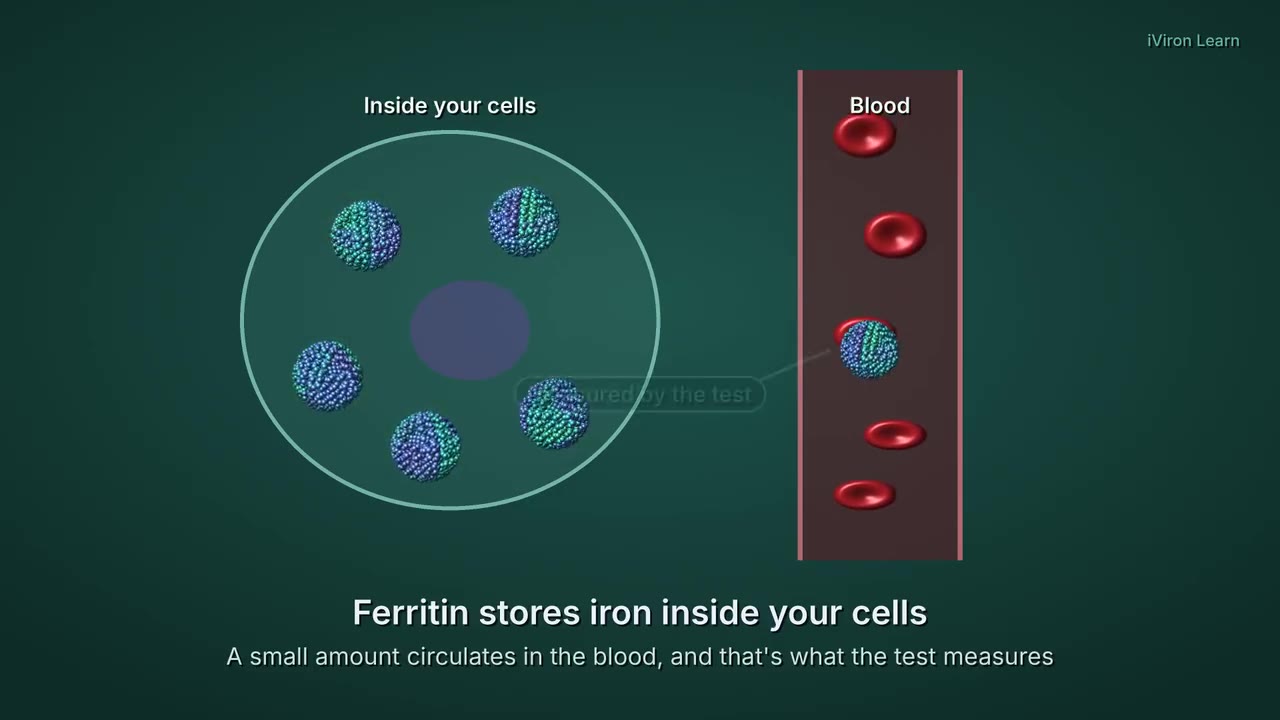
Each ferritin molecule is a tiny hollow cage made of 24 proteins. Iron enters through small channels and is packed inside as a mineral core that can hold up to about 4,500 iron atoms. Stored this way, iron is kept out of harm's way, so it can't damage your cells.
All or nothing
Ferritin has no tap. To release its iron, a helper protein tags the whole molecule and sends it to the lysosome, the cell's recycling centre. There the cage is broken down and its iron is freed at once.
Where the iron goes
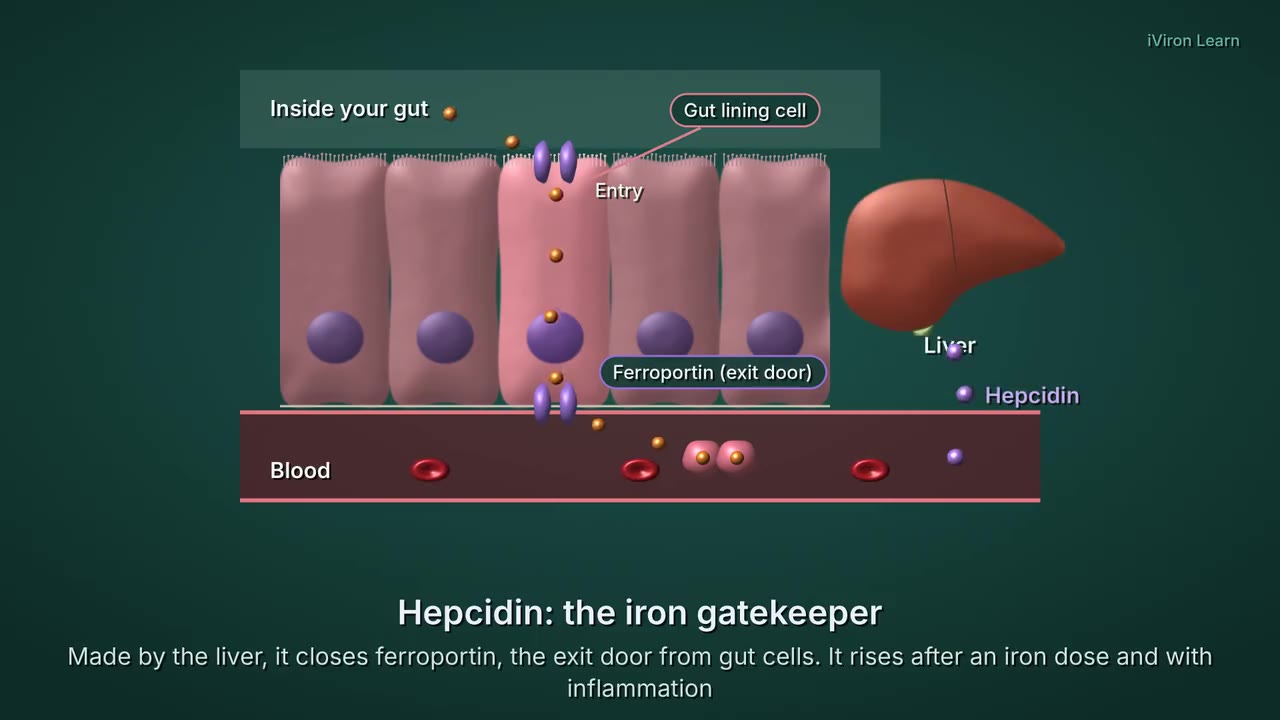
- Out of the cell: the freed iron leaves through ferroportin, the cell's exit door.
- Through the blood: transferrin carries it, like a delivery truck.
- Into new red blood cells: in the bone marrow, iron is built into hemoglobin.
- Into energy: hemoglobin carries oxygen to your muscles, where it is used to make energy. That's one reason low iron can leave you tired.
Savings and spending
A simple way to think about it: ferritin is your savings account, and hemoglobin is where the iron gets spent. Your stores can run low before your hemoglobin drops.
What to do with your number
A small amount of ferritin circulates in your blood, and that's what the test measures. Bring your result to your doctor with your other results and how you've been feeling. They'll decide what it means for you.